Unlike many cuisines, Bhutanese savoury dishes are almost always boiled, steamed or stewed. There is little baking, grilling or roasting; most often a dish is a handful of good ingredients brought together in a single pot.
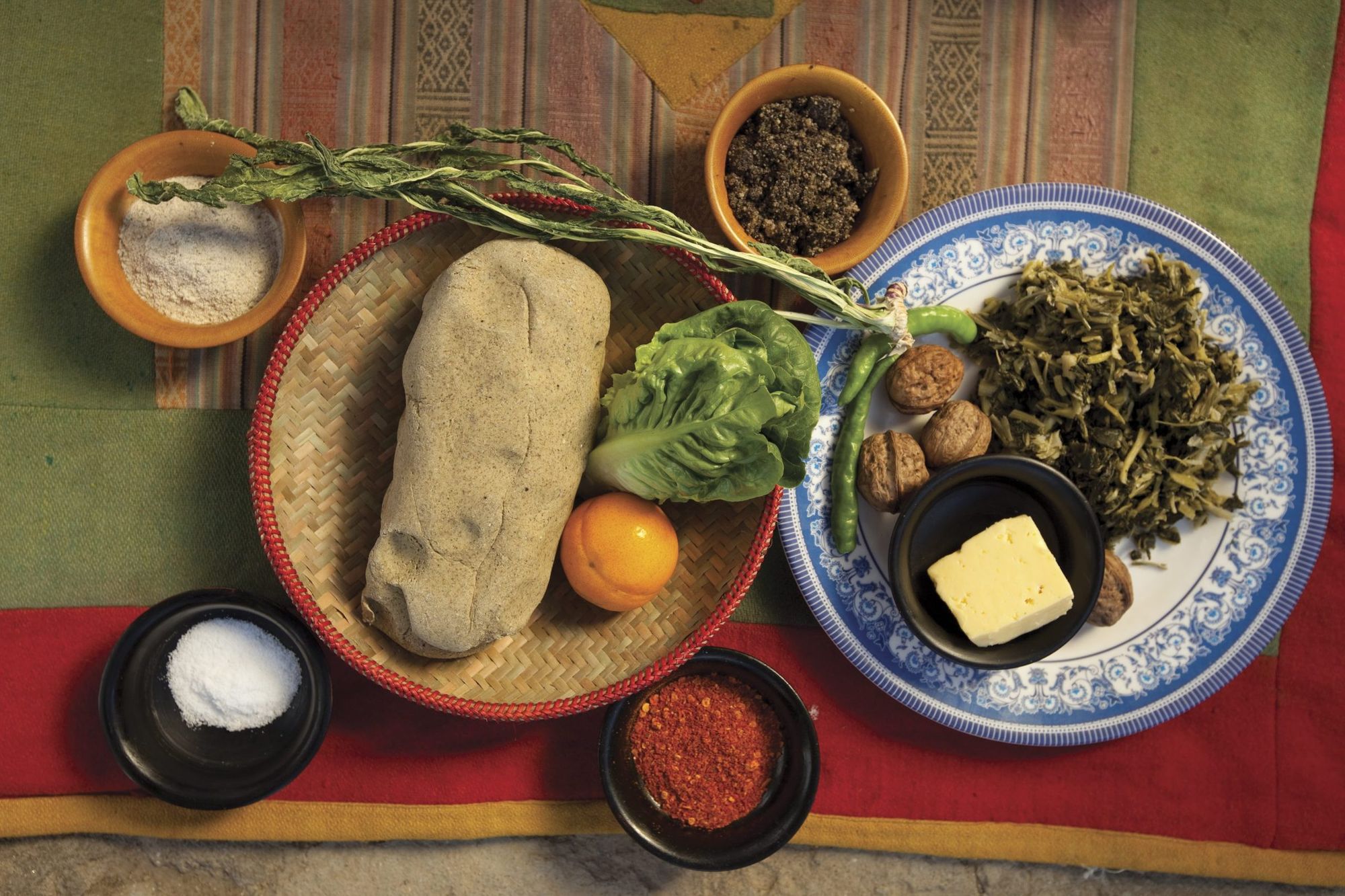
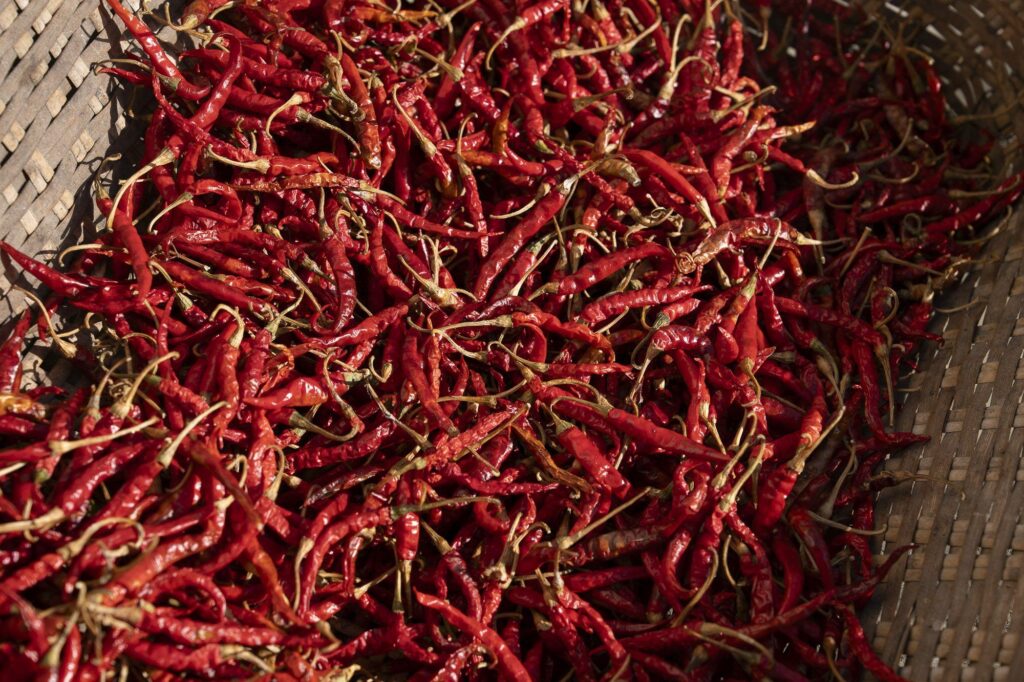
The most distinctive thing about Bhutanese food is its heat. Chillies are eaten as a vegetable, and they appear in nearly everything – red and green, fleshy and slender, fresh, dried, powdered or pickled. Ezay, a paste of chilli, onion and ginger, sits on almost every table. In autumn the rooftops of whole villages turn red with chillies laid out to dry, and many households still burn a few to keep bad spirits away; a couple are even dropped into home-brewed ara for good luck.
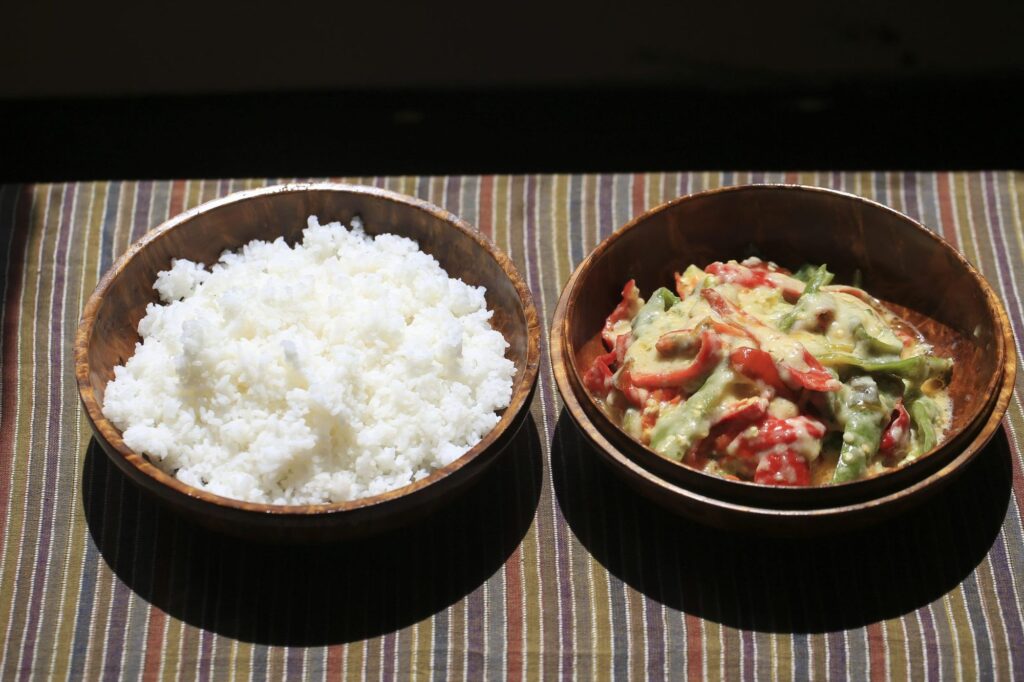
Cheese is the other constant. Datshi, a soft farm cheese, goes into so many vegetarian dishes that their names end with it: ema datshi, kewa datshi, shamu datshi. Red rice, nutty and earthy, forms the base of most meals – an heirloom grain cultivated on the terraces of the western valleys for centuries.
To understand it properly, you need to cook it. On our culinary journey, A Taste of Bhutan, Ugyen takes guests into family kitchens from Punakha to Bumthang, and each guest goes home with his Authentic Bhutanese Cookbook.