

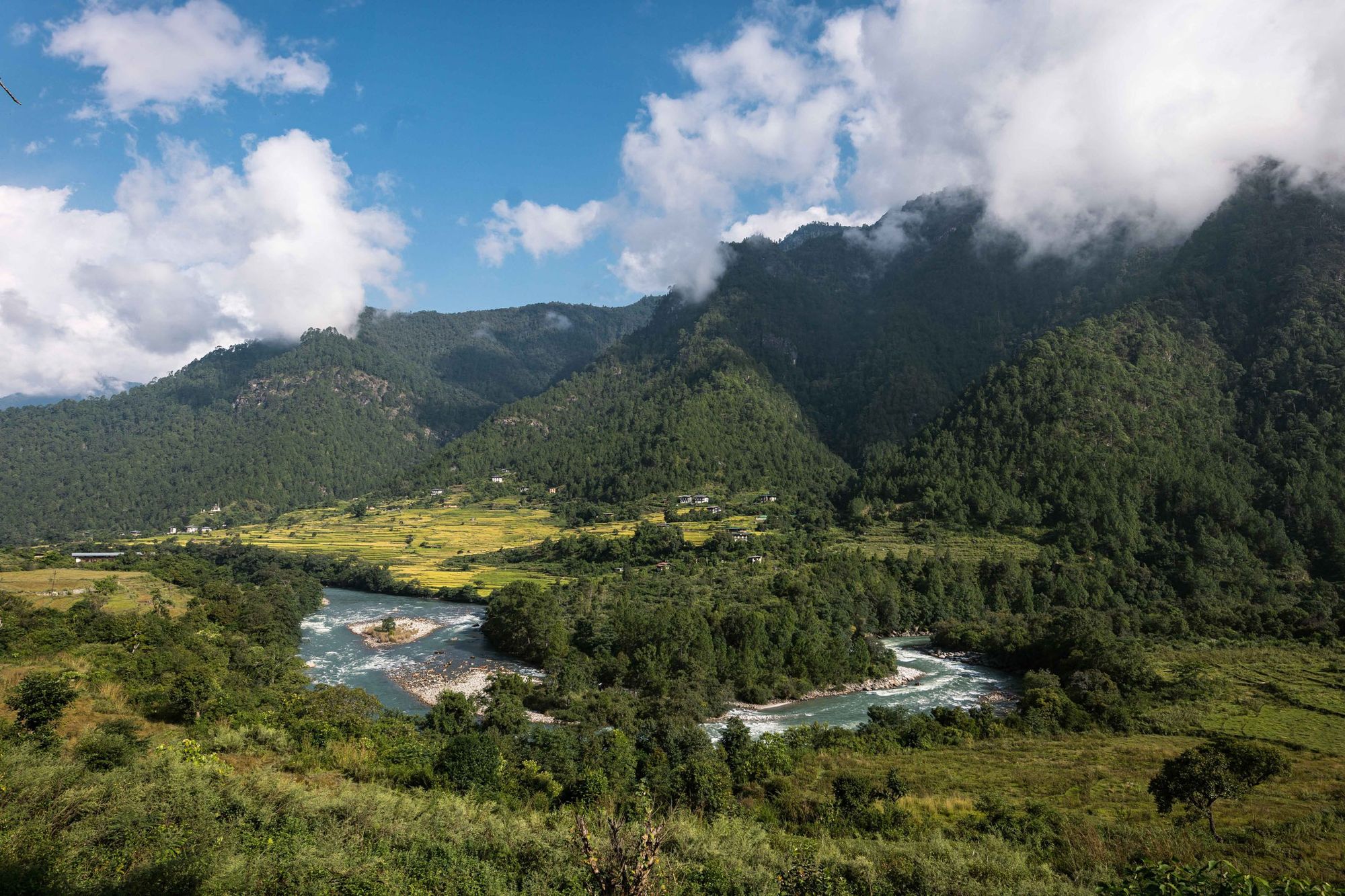
Paro
A broad valley of rice fields and farmhouses beneath Jomolhari, home to the international airport and Tiger’s Nest.
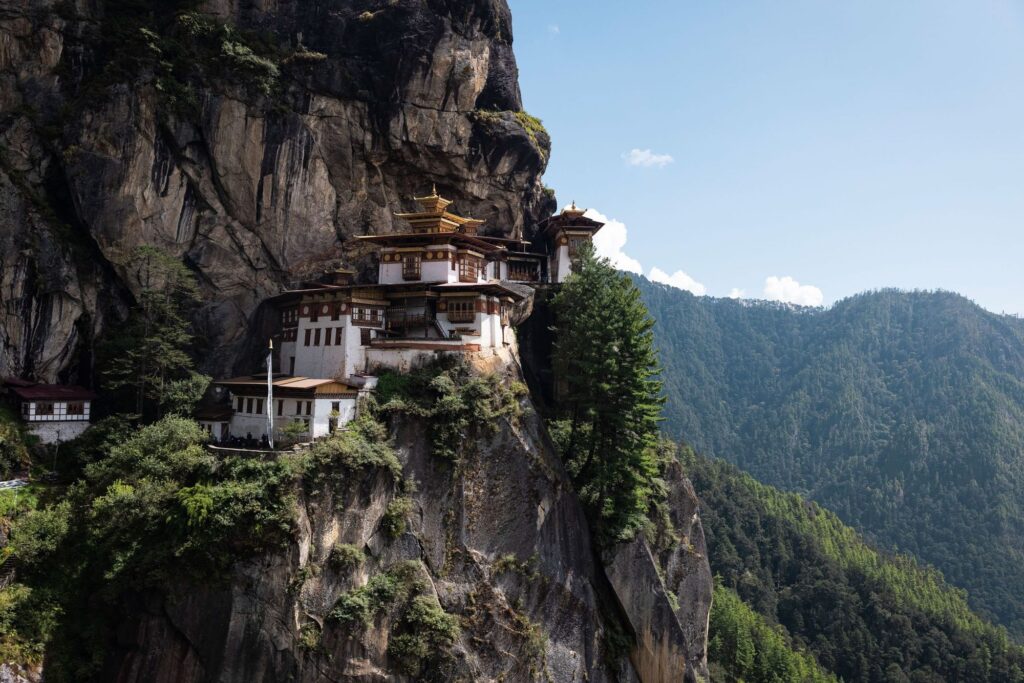
Paro is where most journeys begin and end. Above the valley, Taktsang – Tiger’s Nest – clings to a cliff 900 metres above the valley floor, where Guru Rinpoche is said to have arrived on the back of a flying tigress. Below, Rinpung Dzong is reached by a traditional covered bridge, and the old watchtower above it houses the National Museum. Kyichu Lhakhang, one of the oldest temples in the country, sits among the fields.
Thimphu
The capital: modern, compact and still a city without traffic lights.
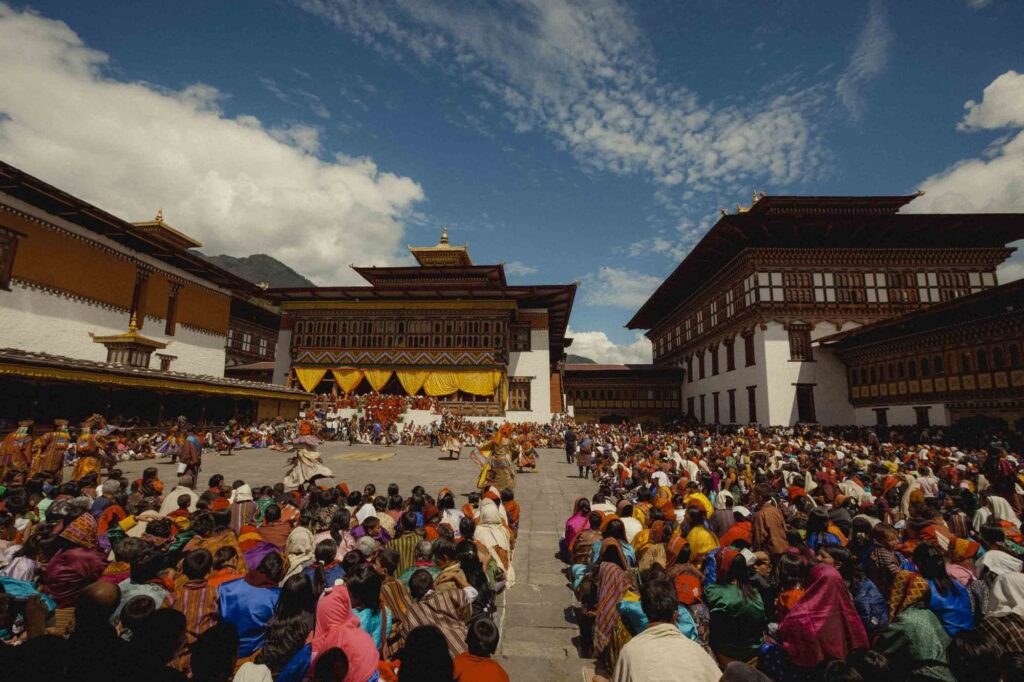
An hour from Paro, Thimphu is Bhutan’s capital and largest town, yet it keeps its traditions close. Tashichho Dzong houses the throne room and the central monk body; Buddha Dordenma, a 51-metre bronze Buddha, watches over the valley; and the weekend market, craft schools and museums make it easy to spend two or three days here.
Punakha
Bhutan’s old capital, warm and fertile, where two rivers meet beneath its most beautiful dzong.
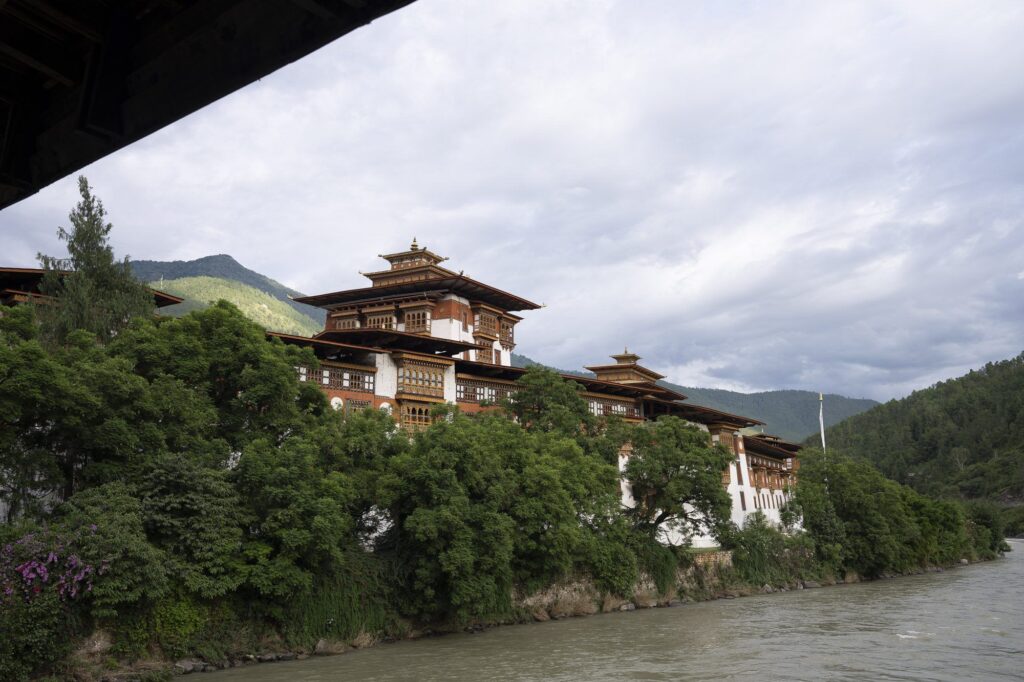
Punakha Dzong stands where the Pho Chhu and Mo Chhu – the male and female rivers – meet. Built in 1637–38, it was the seat of government for three centuries and is still the winter home of the central monk body. Around it lie rice terraces, the fertility temple of Chimi Lhakhang and the hilltop Khamsum Yulley Namgyal Chorten. Ugyen was born in this valley.
Wangdue & Phobjikha
A glacial valley of wetlands and pine forest, winter home of the black-necked crane.
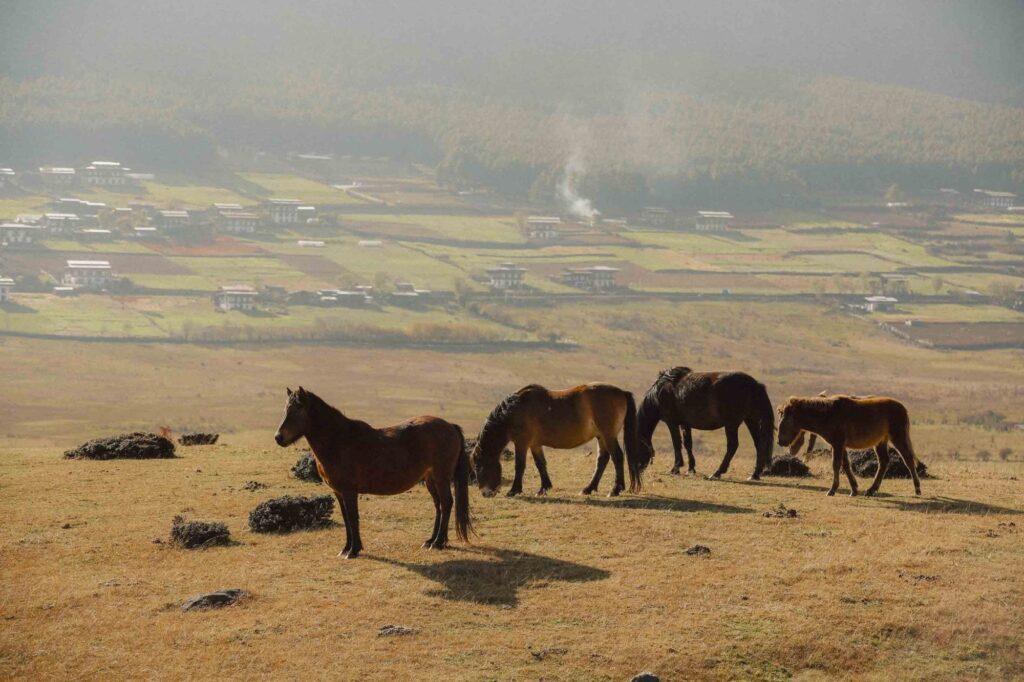
South of Punakha, Wangdue Phodrang stands above the river. Higher up, over the pass at Lawala, the wide valley of Phobjikha is one of Bhutan’s most beautiful places, overlooked by Gangtey Goenpa. From late October to mid-February, endangered black-necked cranes winter here, arriving from the Tibetan plateau.
Bumthang
The spiritual heartland of Bhutan, a cluster of high valleys dense with ancient temples.
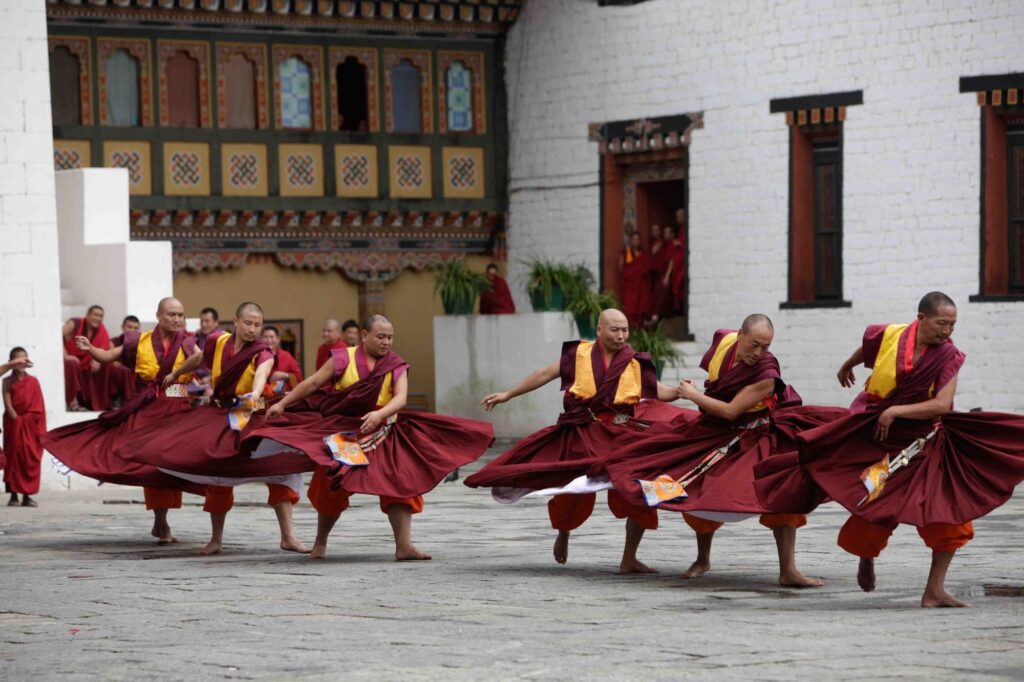
Bumthang is the religious heart of the country. Jambay Lhakhang dates from the seventh century; Kurjey Lhakhang marks a cave where Guru Rinpoche meditated; Tamshing preserves some of the oldest murals in Bhutan. Bumthang is also buckwheat and yathra country – sample its noodles and woollen weaving – and its people, the Bumthaps, have their own dialect and cuisine.
Haa
A quiet, high valley over the Chele La, little visited and deeply rural.
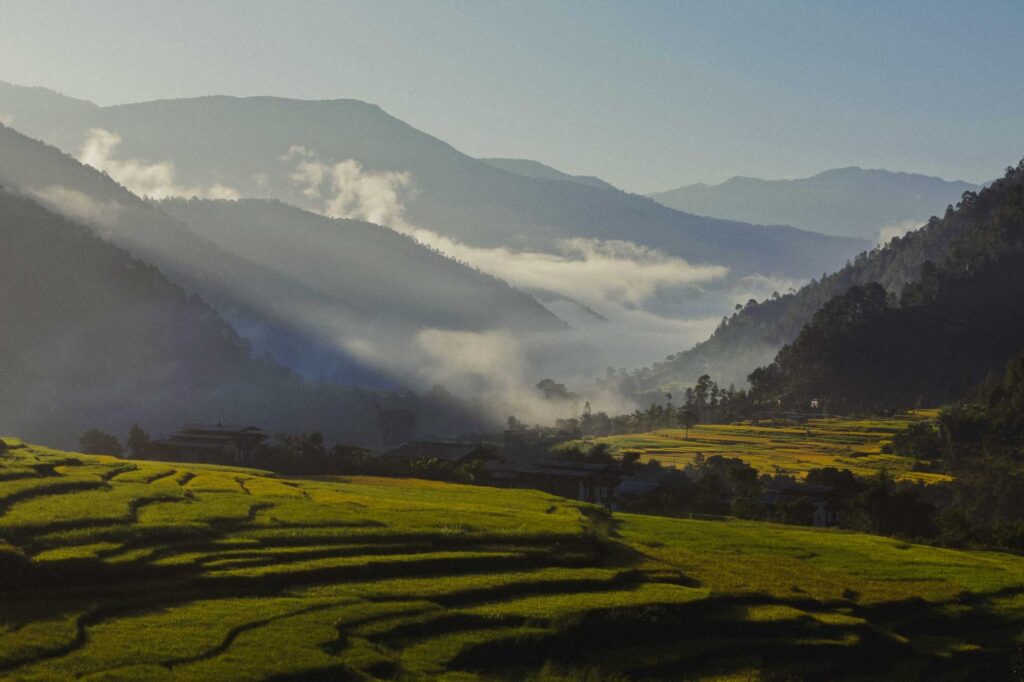
Two hours from Paro over the Chele La pass at 3,988 metres, Haa sees few visitors. Its villages, temples and farmhouses offer a glimpse of rural life largely unchanged, and its buckwheat hoentay dumplings are famous. Much of the valley is still forested, and the Haa Summer Festival celebrates its herding culture each July.